Discovering Dehydrated spruce tips? Taste their flavour — straight from our northern landscapes.
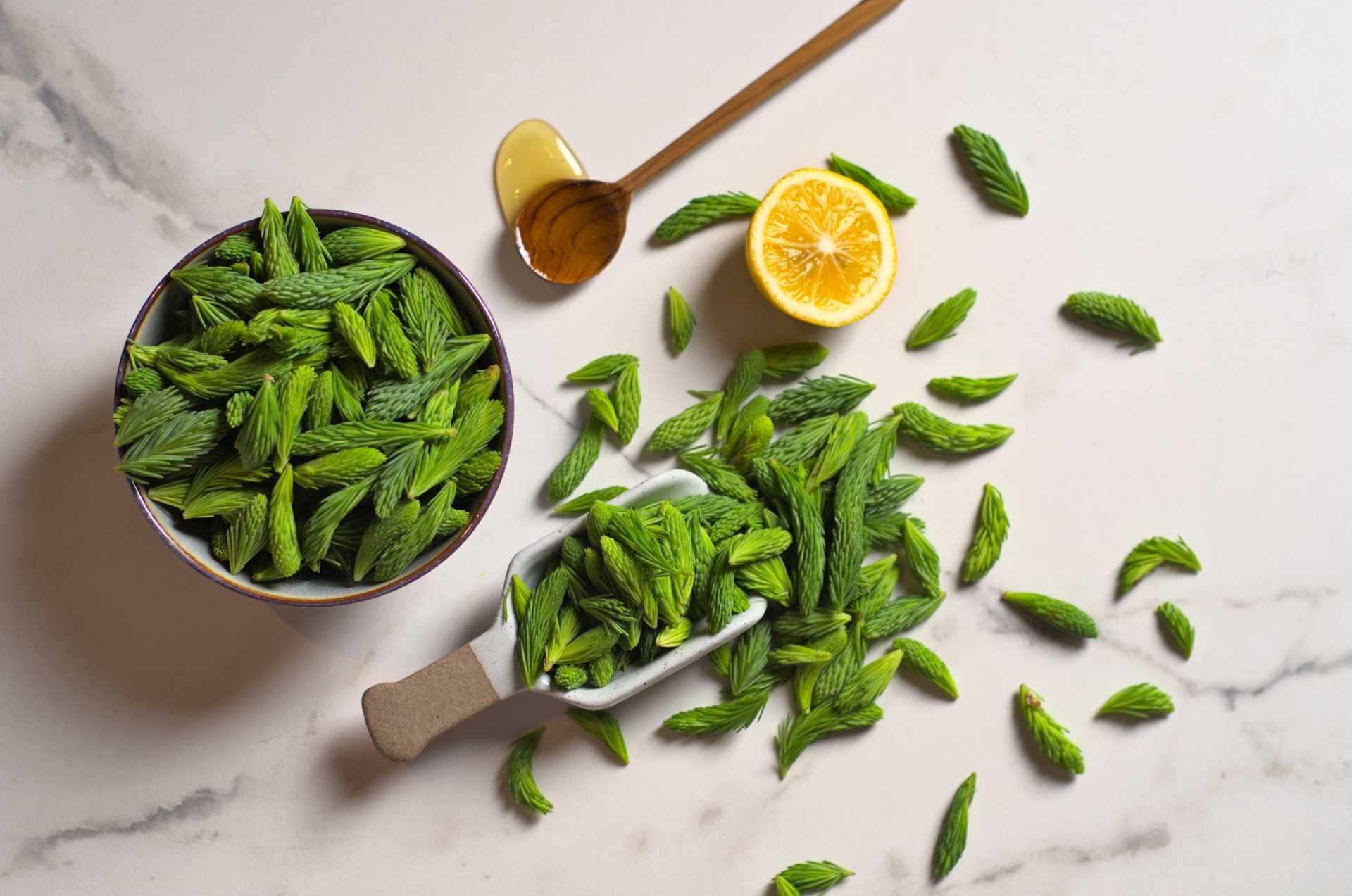
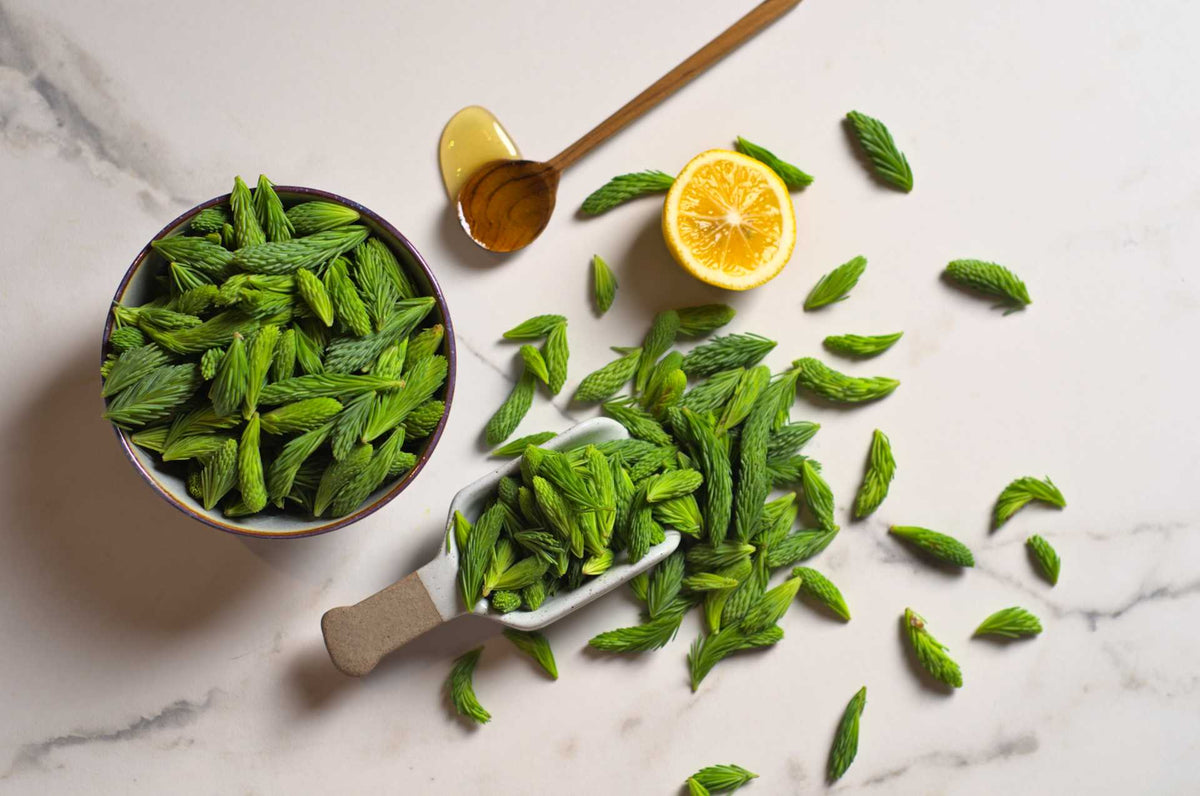
There is a window, between late April and early June, that lasts only a few weeks. The spruce trees emerge from their winter silence and reveal, at the tip of each branch, tiny shoots of an almost fluorescent tender green. Soft to the touch, still wrapped in a light resinous film, they resemble nothing else. This is the moment to harvest them — or to wait for them, dried and concentrated, to use them all year long.
The spruce: the tree and its shoots
The spruce is one of the most widespread conifers in Quebec's boreal forest. Found from southern Quebec all the way to Nunavut, it is recognized by its conical shape, its short sharp needles and its lightly scaly grey bark. A resilient tree, deeply rooted in the landscape and in the memory of the North.
Its spring shoots — the young buds that emerge at the tips of the branches — are tender, aromatic and edible. They concentrate the tree's essential oils at their most vivid stage, before the needles harden and lose their softness. Slowly dried, they preserve these aromas while gaining in intensity: a pinch is enough to perfume an entire preparation.
A flavor profile all its own
What sets spruce shoots apart is their distinctly citrusy character. Where other conifers evoke resin above all, the spruce expresses something more lively, more luminous: a fresh acidity close to citrus, with notes of pine, fresh herbs and a slight resinous roundness in the background. You might think of green tea at times, or of lemongrass — but it is something else entirely.
Balsam fir offers a more resinous and menthol register. Spruce is more airy, more lively. Two different expressions of the forest — complementary rather than competing.
Spruce beer: a Quebec tradition
Long before spruce shoots caught the attention of chefs, they were already fermenting in vats. Spruce beer is one of Quebec's oldest brewed beverages. The first Europeans in New France learned it from Indigenous peoples, who had long known the virtues of the tree.
How to use them in cooking
As a syrup — a simple syrup infused with dried shoots takes on a remarkable aromatic dimension: citrusy, resinous, lightly sweet. It works in cocktails, mocktails, vinaigrettes, small-fruit desserts, or drizzled over fresh cheese.
As an infusion or tisane — a few dried shoots in simmering water yield a soothing drink with notes of pine and citrus. To drink on its own or use as a liquid base in a recipe.
In marinades — spruce shoots pair naturally with fatty fish (salmon, Arctic char, trout) and poultry. Their natural acidity gently tenderizes proteins while imparting a lively, forest-scented aroma.
In desserts — panna cotta, crème brûlée, sorbet, ganache: spruce shoots bring an unexpected freshness to sweet preparations. Their citrusy character pairs very well with Quebec's red and black small fruits.
In sauces and compound butters — infuse the shoots in butter beaten with garlic and salt for a spruce butter to drape over grilled fish, roasted vegetables or toast.
Recipe idea: homemade spruce syrup
Bring 250 g of water and 250 g of sugar to a boil. Remove from heat. Add two tablespoons of dried spruce shoots, cover and steep for 20 minutes. Taste — if the aroma is sufficiently pronounced, strain. If not, steep a few more minutes. Bottle and refrigerate for up to three weeks.
This syrup slips into a glass of gin with a dash of lemon and sparkling water for an instant boreal cocktail. It also blends with cider vinegar and oil for an exceptional vinaigrette over a beet and goat cheese salad.
Flavor pairings
- Salmon, Arctic char and trout — the most natural pairing: spruce's resinous freshness balances the richness of fatty fish
- Quebec small fruits — blueberries, cranberries, currants: spruce's acidity amplifies their brightness
- Lemon and citrus — reinforce the citrusy component, for luminous preparations
- Fresh goat cheese and soft-rind cheeses — the herbaceous freshness of spruce complements milky, mild cheeses
- Honey and maple syrup — the classic pairing of boreal sweetness and conifer resin, always right
- Gin and craft beers — the spruce finds a natural echo in the botanicals of spirits
Responsible harvesting and origin
Spruce shoots are harvested only once a year, at the precise moment of spring bud break. This brevity calls for measured harvesting: only a portion of each branch's shoots is taken so as not to disrupt the tree's growth. Excessive harvesting from the same tree can weaken it or deform its shape, and harm wildlife that feeds on the tender shoots.
The shoots offered at Racines boréales are harvested in Quebec by pickers who know the forests, respect the tree's cycles and practice minimal-impact harvesting. For more on the botany of the spruce, la Flore laurentienne is an authoritative reference for Quebec's indigenous species.
Spruce shoots from Racines boréales
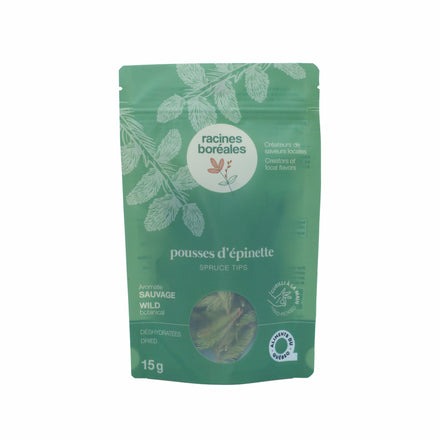
We offer dried spruce shoots so you can work with this exceptional boreal ingredient beyond their short spring season. Dehydration concentrates their aromas and makes them available year-round — ready to infuse, grind, stir into a syrup or sprinkle over a dish.
A forest ingredient from Quebec that deserves a permanent place in your pantry.