Discovering Dehydrated juniper berries? Taste their flavour — straight from our northern landscapes.
Juniper berries are perhaps the most discreet spice in your pantry — and yet you probably consume them every week without knowing it. They hide behind every glass of gin. Their resinous, slightly lemony, peppery and sweet fragrance is one of the most recognizable aromatic signatures in the culinary world. It's time to bring them out of the bar's shadow and into the kitchen.
Behind Every Gin, a Berry
The word "gin" didn't come from nowhere. It is a contraction of genever, the Dutch term for juniper — itself derived from the French genièvre. Common juniper (Juniperus communis) is a plant native to the Northern Hemisphere, present in Quebec as throughout Europe and temperate Asia. Its berries are the only mandatory ingredient in the legal production of gin. Without them, it is no longer gin.
This founding role in distillation has long overshadowed their culinary potential. Yet in Nordic and Central European kitchens, juniper berries have been part of the spice vocabulary for centuries — on par with pepper or cloves.
A Remarkably Complex Aromatic Profile
The first impression is resinous, almost woody — the smell of a conifer forest, crisp and fresh. Then come fruity notes, slightly lemony, a light bitterness, and a lingering peppery edge. In the background, a subtle sweetness, almost sugary, that rounds everything out. This layering of registers — at once astringent, aromatic, fruity and sweet — makes it a surprisingly versatile spice.
There is also a distinction between European juniper berries and those from Quebec. The former, from a different terroir, tend toward more peppery and resinous notes. Quebec berries, on the other hand, are known for their fruitier character — softer, more approachable, with an aromatic presence that appeals even outside the classic pairings with game.
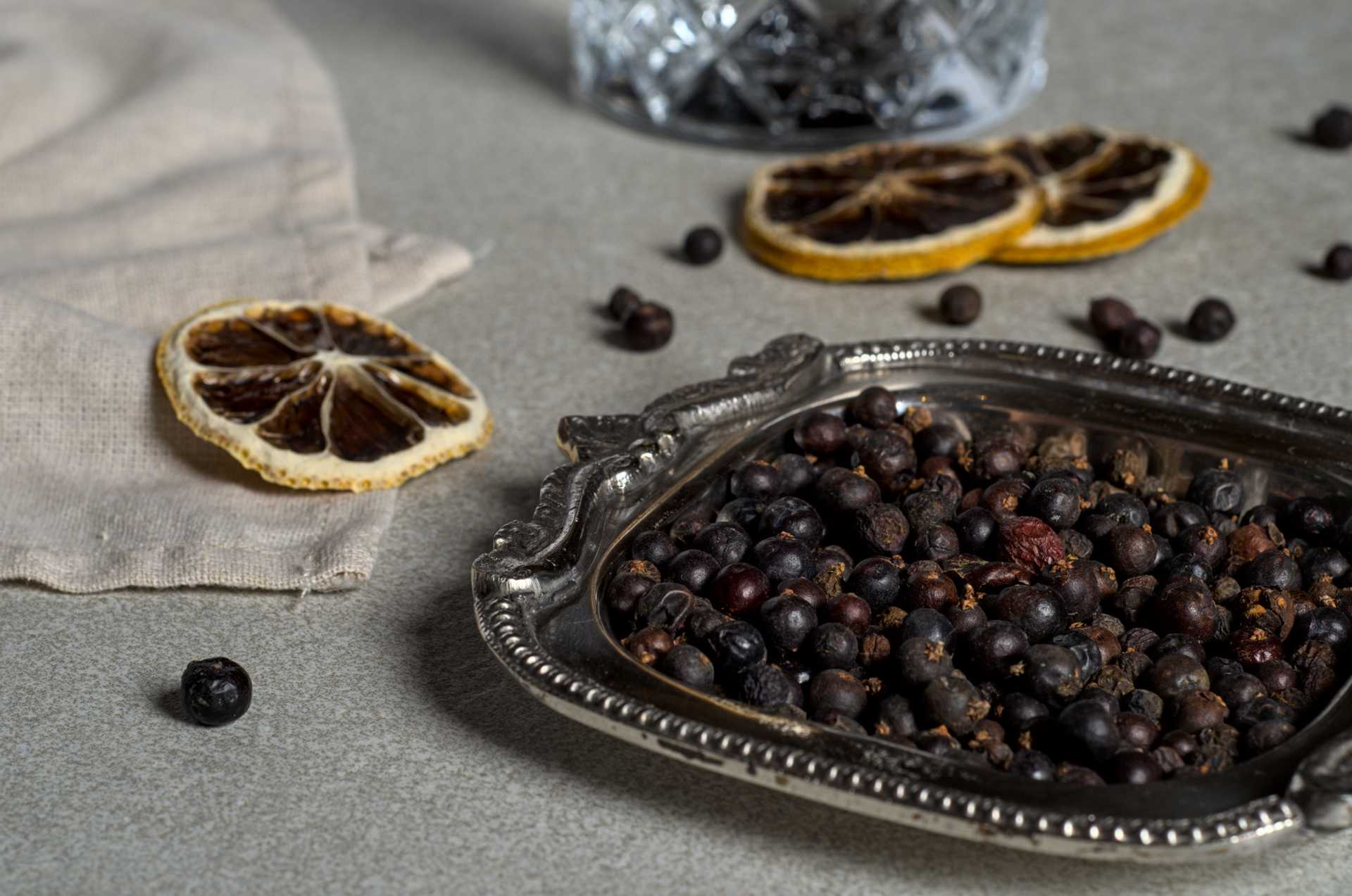
Dehydrated berries concentrate these aromas. They are less volatile than fresh berries, but their fragrance is more stable and easier to measure in cooking. This is the form in which they work best as a culinary spice.
How to Prepare Them
Juniper berries can be used whole or crushed, depending on the desired effect.
- Whole: added at the start of cooking in a broth, braise, brine or marinade, they release their aromas gradually.
- Crushed in a mortar: they reveal more intensity and blend better into dry rubs, spice blends and stuffings.
- Finely ground: in a sauce or dessert where you want aromatic presence without texture, they can be ground into a fine powder for easy incorporation.
As a general rule, a few crushed berries are enough to flavor a sauce or a jar of marinade. Their taste is powerful: it is better to use too few and adjust than to overdo it. It is at the moment of crushing that the essential oils are released — the mortar is therefore the ideal tool for getting the most out of them.
In the Kitchen: From Game to Dessert
Juniper berries naturally belong to the cuisine of the North and forest terroirs. Their affinity with game and charcuterie is well documented, but their applications go well beyond.
- Wild meats and game: venison, moose, duck, wild boar — juniper berries are the classic companion to game. They temper the pronounced taste of wild meats and bring an aromatic depth that defines the most compelling terroir dishes. Add a few crushed berries to your rub or braise.
- Charcuterie and cured meats: in a brine for smoked pork, a salmon gravlax, or a terrine, they play both an aromatic and a mildly preservative role.
- Sauces and stocks: a few whole berries in a red wine sauce, a veal stock or a roasting jus — they blend into the whole and add a resinous note that is hard to identify but impossible to ignore.
- Poultry and pork: a pork tenderloin or a roasted duck leg with crushed juniper berries, a few peppercorns and fresh thyme — the pairing is direct and effective.
- Fermentation and lacto-fermented vegetables: juniper berries are a traditional spice in sauerkraut and lacto-fermented vegetables. They contribute aroma and support the antimicrobial environment of fermentation.
- Desserts and drinks: their resinous and lemony character makes them surprisingly at home in pastry. Steep a few in warm cream for a panna cotta or a dark chocolate ganache. As a syrup, they flavor a non-alcoholic cocktail or a citrus granita with Nordic elegance.
Flavor Pairings
- Citrus: lemon, orange, grapefruit — their acidity highlights the lemony notes of juniper
- Pepper and warm spices: black pepper, pink peppercorns, cardamom, juniper blend well together in spice mixes for meats
- Beets and root vegetables: the earthy sweetness of roasted beets is magnified by a hint of juniper at the end of cooking
- Dark chocolate: in a ganache or chocolate sauce, juniper adds a resinous and peppery touch that pleasantly surprises
- Aged cheeses: particularly washed-rind or natural-rind cheeses, such as an Alfred le Fermier or an Oka artisan.
Where to Find Dehydrated Juniper Berries?
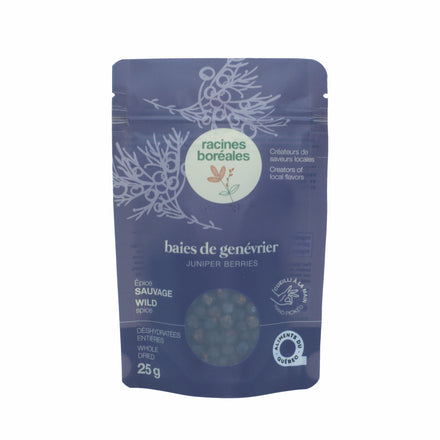
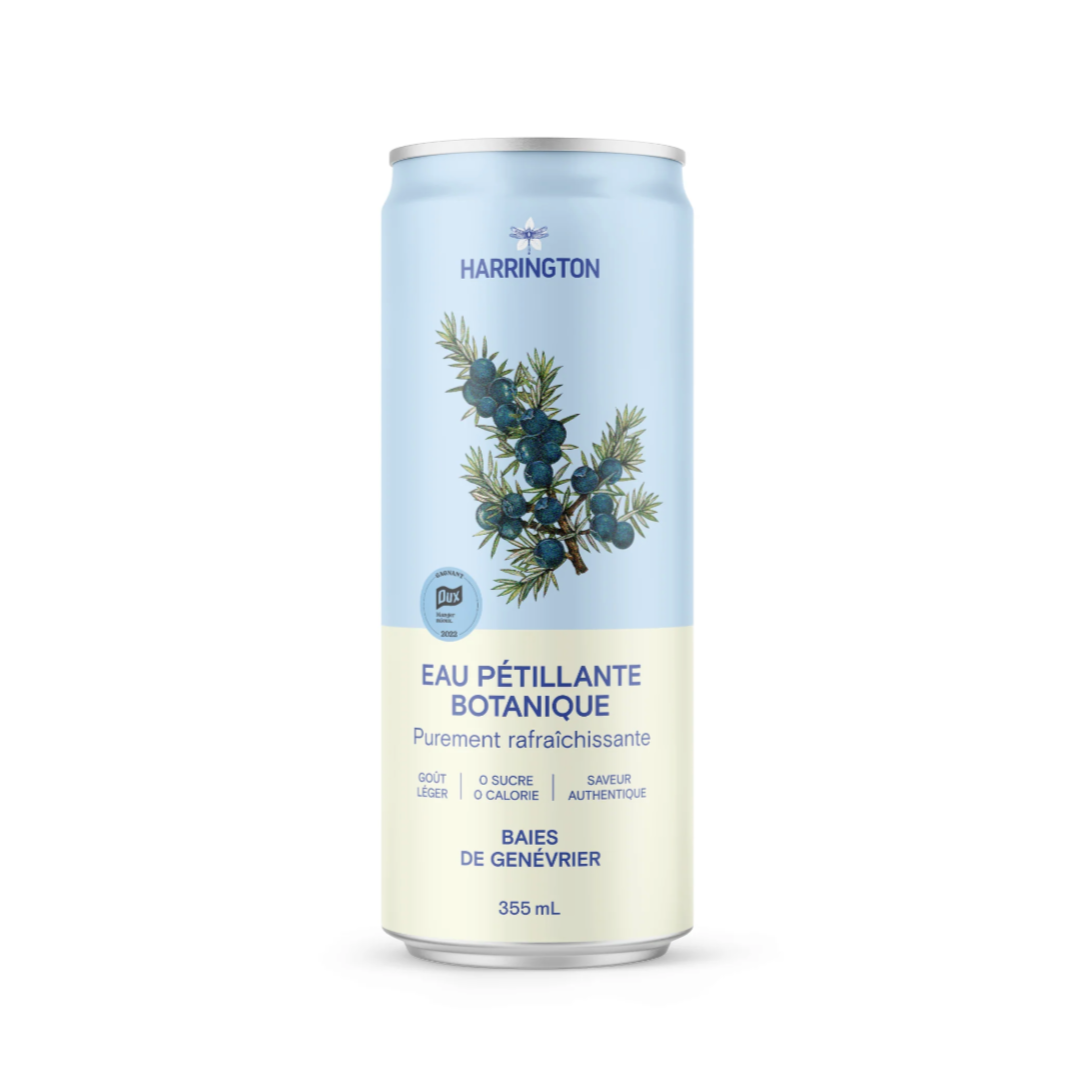
Racines boréales offers dehydrated juniper berries, dried to preserve the full richness of their resinous and fruity aromas. A Nordic terroir spice with many culinary virtues — from game marinades to desserts, through brines and infusions.