Crush a leaf between your fingers. What reaches you is not the smell of grass — it's something more enveloping, more complex: a blend of wild thyme and eucalyptus, with a sweet, resinous edge. That's sweetfern. And those who encounter it for the first time often have the same reaction: what on earth is this?
A plant of dry slopes, often overlooked
Sweetfern (Comptonia peregrina) is a native shrub of eastern North America, well established in Quebec. It grows on poor, acidic soils where few other plants venture: rocky slopes, sandy ground, edges of the boreal forest. It colonizes sunny embankments with quiet discretion, forming dense, fragrant thickets.
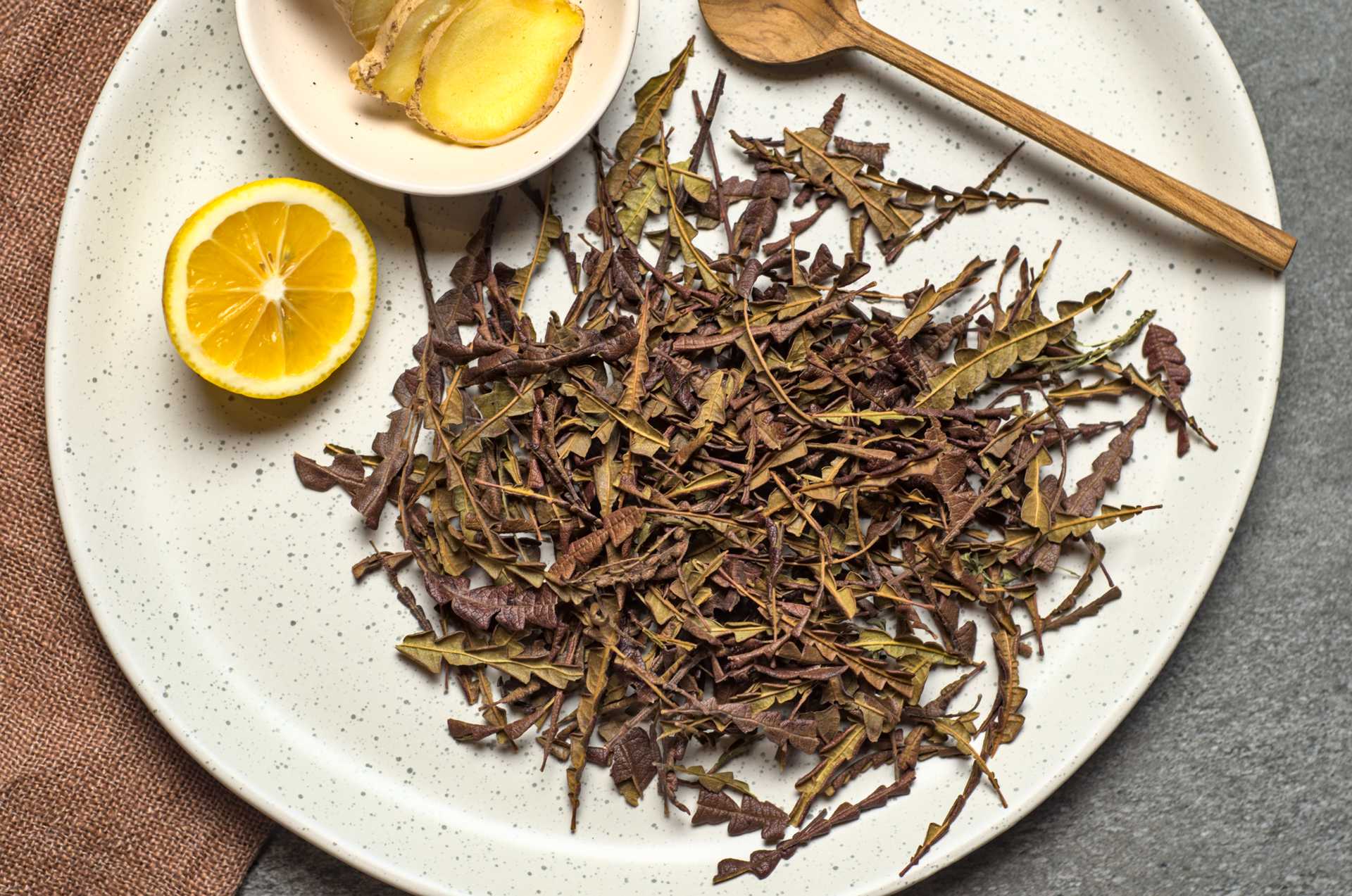
Its elongated, deeply lobed foliage looks remarkably like that of a fern — hence its common English name, sweetfern. But don't be fooled: sweetfern is not a fern. It is a flowering shrub in the Myricaceae family, a close relative of sweet gale. The plant itself carries its fragrance, concentrated in small resinous glands visible on the leaves.
What it tastes — and smells — like
The aromatic profile of sweetfern is at once familiar and disorienting. Its dried leaves evoke:
- Thyme — herbaceous, slightly earthy, immediately recognizable
- Eucalyptus — fresh, slightly camphor-like
- A sweet edge — subtle but present, and perhaps the origin of the sweet in sweetfern
It is not a monolithic spice. It is a bouquet — a spice that reveals itself differently depending on temperature, fats, and steeping time. Cold, it is fresh and herbaceous. Hot, in a cooking base, it unfolds its thyme and eucalyptus notes, deeper and fuller.
Is sweetfern edible?
Yes. Sweetfern leaves are edible and have been used in cooking for centuries. Indigenous peoples of eastern North America used it as an aromatic herb and recognized various properties — notably digestive and decongestant. In the kitchen, it is the aromatic profile that commands attention: dried leaves that act as a spice, to be used with a measured hand.
How to use it in cooking
In marinades for poultry and pork — sweetfern is a natural ally for white meats. Its thyme and eucalyptus aromas penetrate the fibers and season deeply. Mix the crushed leaves with olive oil, a splash of cider vinegar, garlic, and salt — marinate for a few hours in the refrigerator.
In dried spice and herb blends — sweetfern integrates naturally into a forest herbs-style blend: spruce, thyme, sweetfern, sweet gale. To rub onto a piece of game or tuck under the skin of a whole chicken before roasting.
As a tea and infusion — this is one of the simplest and most revealing uses. Crush a few dried leaves into simmering (not boiling) water. Do not steep for more than 4 minutes: beyond that, bitterness takes over. Sweetfern tea is aromatic, slightly herbaceous, comforting. Drink it on its own or use it as a liquid base in a sauce or broth.
In cocktails and mocktails — a few crushed leaves in a glass with gin, a dash of lemon, and sparkling water: a resolutely boreal aperitif drink, effortlessly.
Flavor pairings
Sweetfern pairs particularly well with:
- Poultry — roast chicken, guinea fowl, quail: the most direct and successful pairing
- Pork — ribs, loin, tenderloin: the richness of the fat carries the herbaceous aromas of sweetfern beautifully
- Citrus — lemon, orange: their brightness complements the herbaceous notes of sweetfern well
- Apple and pear — in compote, tart, or chutney, with a pinch of sweetfern
- Honey and maple syrup — to balance the herbaceous side and create boreal syrups or vinaigrettes
- Gin and botanical spirits — the aromatic profile of sweetfern naturally dialogues with the botanicals in spirits
Recipe idea: sweetfern roast chicken
Crush dried sweetfern leaves between your palms and mix them with oil, garlic, and salt. Tuck the mixture under the chicken skin before roasting. The sweetfern perfumes the flesh deeply without ever overpowering it — a result of unexpected aromatic complexity.
Harvesting and provenance
Sweetfern grows wild in Quebec. The shrub, though hardy, deserves a measured harvest so that populations can renew themselves from one year to the next.
At Racines boréales, our dried sweetfern leaves are harvested by responsible foragers who know the sites and respect the plant's cycles. To learn more about the botany of Comptonia peregrina, la Flore laurentienne offers a detailed descriptive profile.
Sweetfern from Racines boréales
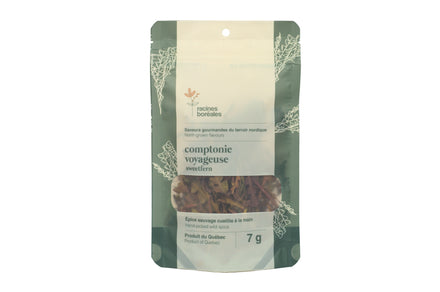
We offer sweetfern in dried leaves, ready to use. Crush them between your fingers before use to release the essential oils — that is where all the fragrance lies.
It is still a little-known spice, rarely seen in Quebec kitchens, but one that has everything it takes to find its place there. Complex, versatile, resolutely local. If you love aromatics that tell the story of a place, sweetfern has a lot to say.