Discovering Québec staghorn sumac? Taste its flavour — straight from our northern landscapes.
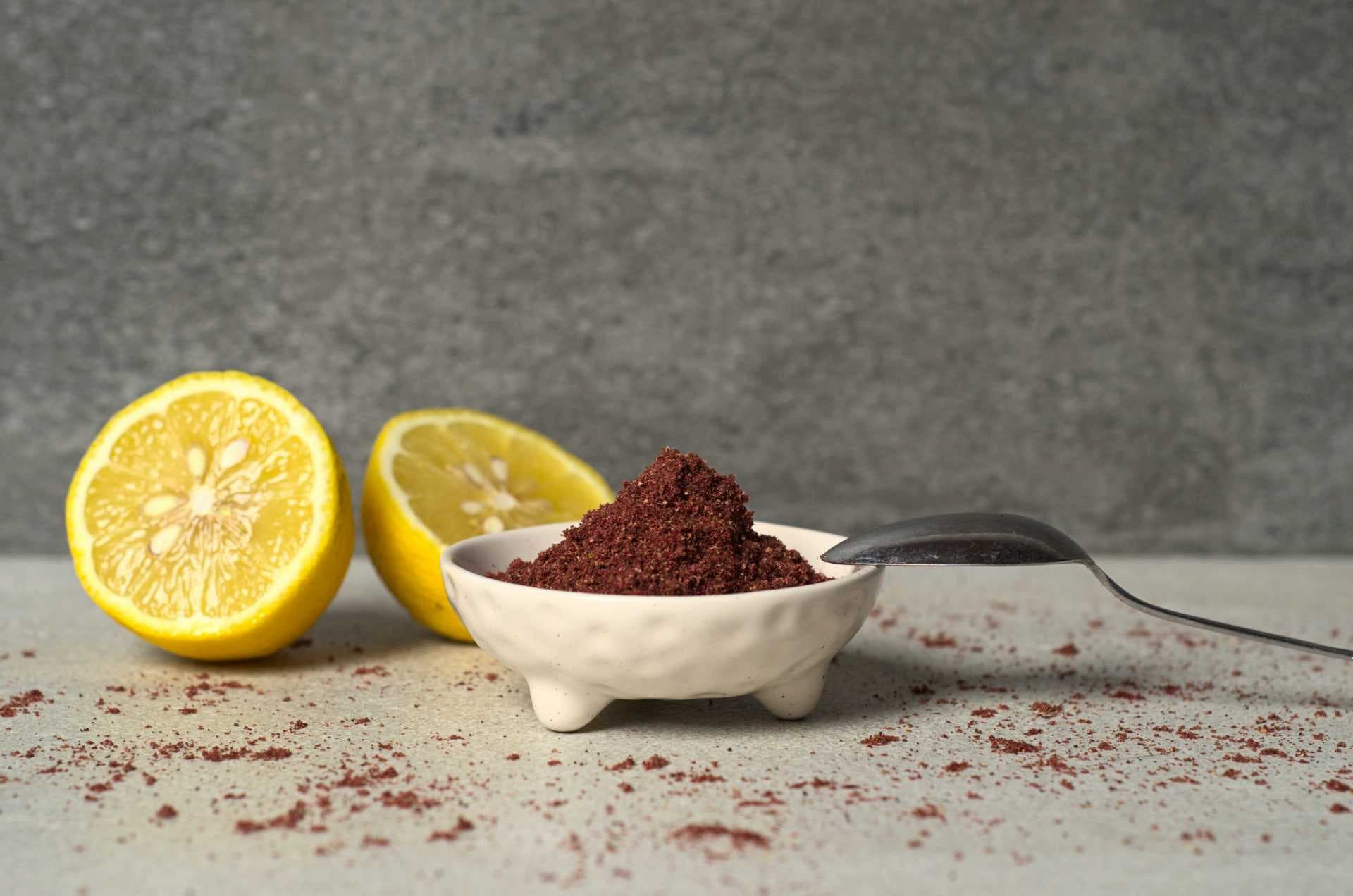
Some spices announce themselves the moment you open the jar. Staghorn sumac is one of them. Take off the lid: a wave of fruity acidity, slightly astringent, somewhere between lemon and pomegranate. The powder is a deep red, almost burgundy, that stains every liquid it touches. This isn't the kind of ingredient that blends quietly into a dish — it's a spice that demands its place.
You may not be familiar with it. Yet staghorn sumac grows everywhere in Québec. Perhaps even at the end of your street.
A native shrub, a millennial spice
Staghorn sumac (Rhus typhina, also known as staghorn sumac in English) is a native shrub of eastern North America, common in disturbed areas: forest edges, roadsides, fallow land. It is easily recognized by its compound leaves that turn a blazing red in autumn, and especially by its upright clusters of bright red drupes — small velvety fruits grouped into dense cones that persist on the plant through winter.

It is these drupes, harvested in autumn and dried, that are ground to produce staghorn sumac powder.
Edible or toxic sumac? The essential distinction
The word "sumac" sometimes raises concern — and for good reason: there is a poisonous sumac in North America (Toxicodendron vernix, formerly Rhus vernix) that causes severe skin reactions on contact. You may already know it as poison sumac. But that is not staghorn sumac.
The distinction is simple and visual: poisonous sumac grows in wet environments (swamps, marsh edges) and bears white or grayish drupes in loose, drooping clusters. Staghorn sumac, on the other hand, grows in dry, sunny spots, and its drupes are bright red, velvety, grouped into dense cones that point upward — impossible to confuse once you know them.
Staghorn sumac is therefore entirely edible, used in cooking for thousands of years. No risk of skin rash or reaction from contact with its fruits. If you have the slightest doubt during wild foraging, consult florelaurentienne.com.
What does staghorn sumac taste like?
Staghorn sumac is first and foremost an acidic spice — but with a round, fruity acidity, very different from plain vinegar or lemon juice. It is both bright and mellow, with a slight tannic astringency that adds depth. You can detect notes of red berries, a hint of earthiness, and that characteristic lemony punch that earned it the common English name: lemon sumac.
Its Middle Eastern cousin, tanner's sumac (Rhus coriaria), is the essential spice of za'atar and Lebanese tables. It shares the fruity acidity, but Québec sumac is slightly more tannic and tart. Two cousins that resemble each other, but each with its own accent.
How to use it in cooking
Its versatility is its greatest quality. Staghorn sumac works in sweet and savory dishes alike, both as a cooking spice and as a finishing touch.
- As a rub for meats: mixed with salt, pepper, and dried herbs, it forms a flavorful coating for lamb, duck, game, or ribs. Its acidity gently tenderizes the fibers and balances the fat.
- In place of lemon in a vinaigrette: a tablespoon of sumac powder in an olive oil vinaigrette advantageously replaces lemon juice — with more complexity and a beautiful color.
- On hummus: generously sprinkled with a drizzle of olive oil and a few fresh herbs, this is one of its most classic uses — a simple way to discover its character.
- In marinades: for white fish, shrimp, or grilled vegetables, it brings a brightness that replaces lemon while adding an extra aromatic dimension.
- In desserts: sprinkled over a blueberry pavlova, stirred into a strawberry compote, or incorporated into a sorbet, it creates that sweet-sour contrast that makes a dessert unforgettable.
- As a finishing salt: mixed in equal parts with flaked sea salt, it becomes an extraordinary table condiment.
Sumac water: extracting the acidity another way
Staghorn sumac also lends itself to an older preparation: sumac water. Simply soak the whole drupes (or the powder) in cold water for 20 to 30 minutes, then strain. The result is a pink, tart, and slightly fruity liquid that can be used just as you would use lemon juice: in a homemade lemonade, a sauce, a gazpacho, or simply to deglaze a pan.
It is also a beautiful way to appreciate sumac in all its subtlety, without the texture of the powder.
Flavor pairings
Staghorn sumac pairs well with ingredients that welcome a touch of acidity or that need balancing:
- Meats: game (venison, moose), duck, lamb, roast chicken
- Fish: trout, Arctic char, salmon, grilled white fish
- Root vegetables: beets, carrots, parsnips are lifted by sumac's acidity
- Berries: blueberries, strawberries — the acidity extends into the same aromatic register
- Dairy: Greek yogurt, labneh, fresh goat cheese — the acidity of sumac and that of fermented milk reinforce each other
- Honey: the sweet-sour contrast is immediate and very effective, particularly in a marinade or vinaigrette
- Dark chocolate: the slight astringency of cacao and that of sumac create remarkable depth
- Citrus: lemon, orange — to push the tart-fruity register even further
The harvest: an autumn affair
Staghorn sumac drupes are harvested in late summer and autumn, when they reach their full red color and maximum aromatic concentration. After harvesting, the clusters are slowly dried before being ground. A simple process that preserves what matters most: that frank acidity, that deep color, that northern terroir fragrance.
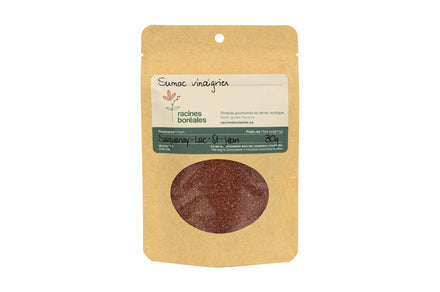
Québec staghorn sumac, hand-harvested from our forests, is available in powder form at Racines boréales.
Discover this ingredient