Discovering Smoked dune pepper? Taste its flavour — straight from our northern landscapes.
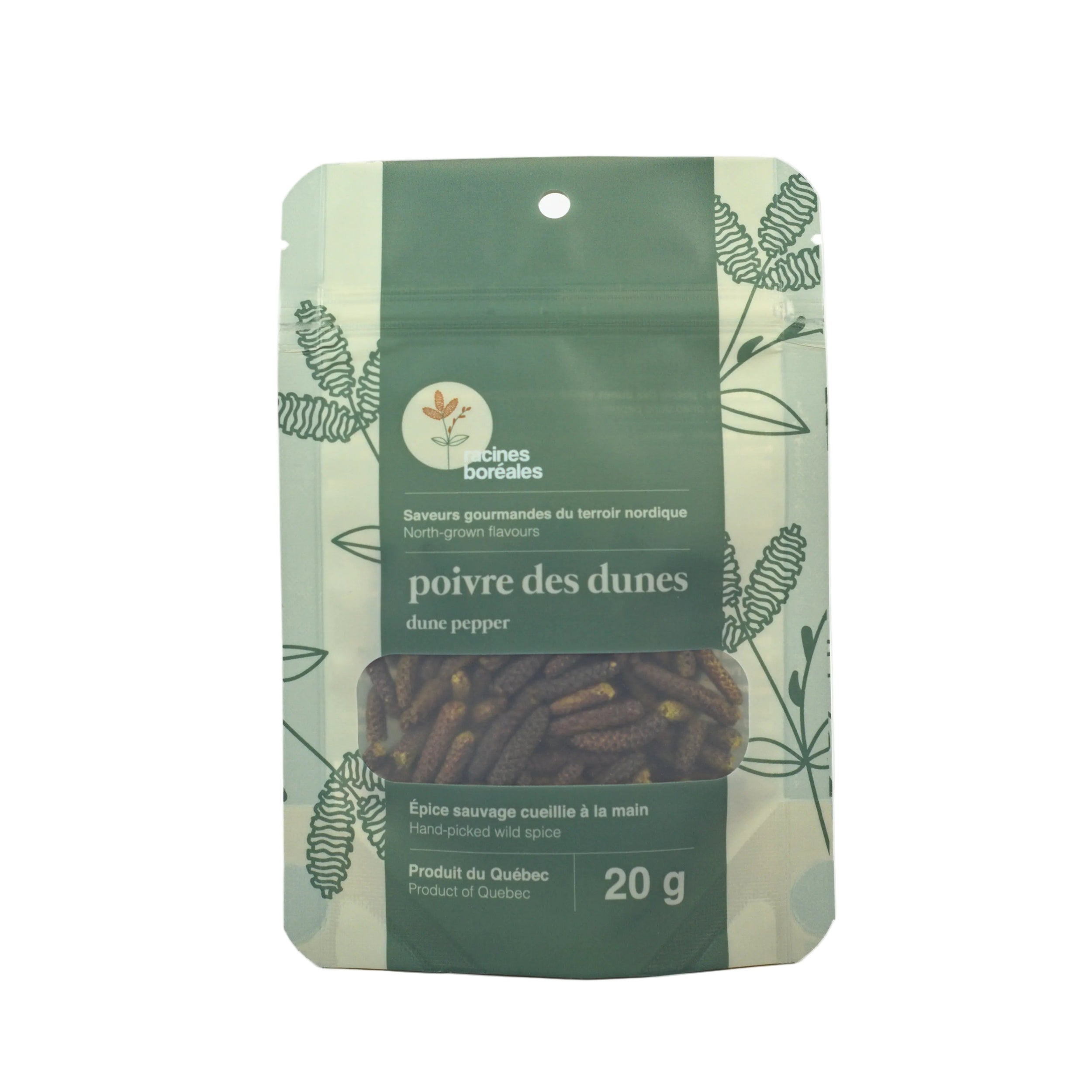
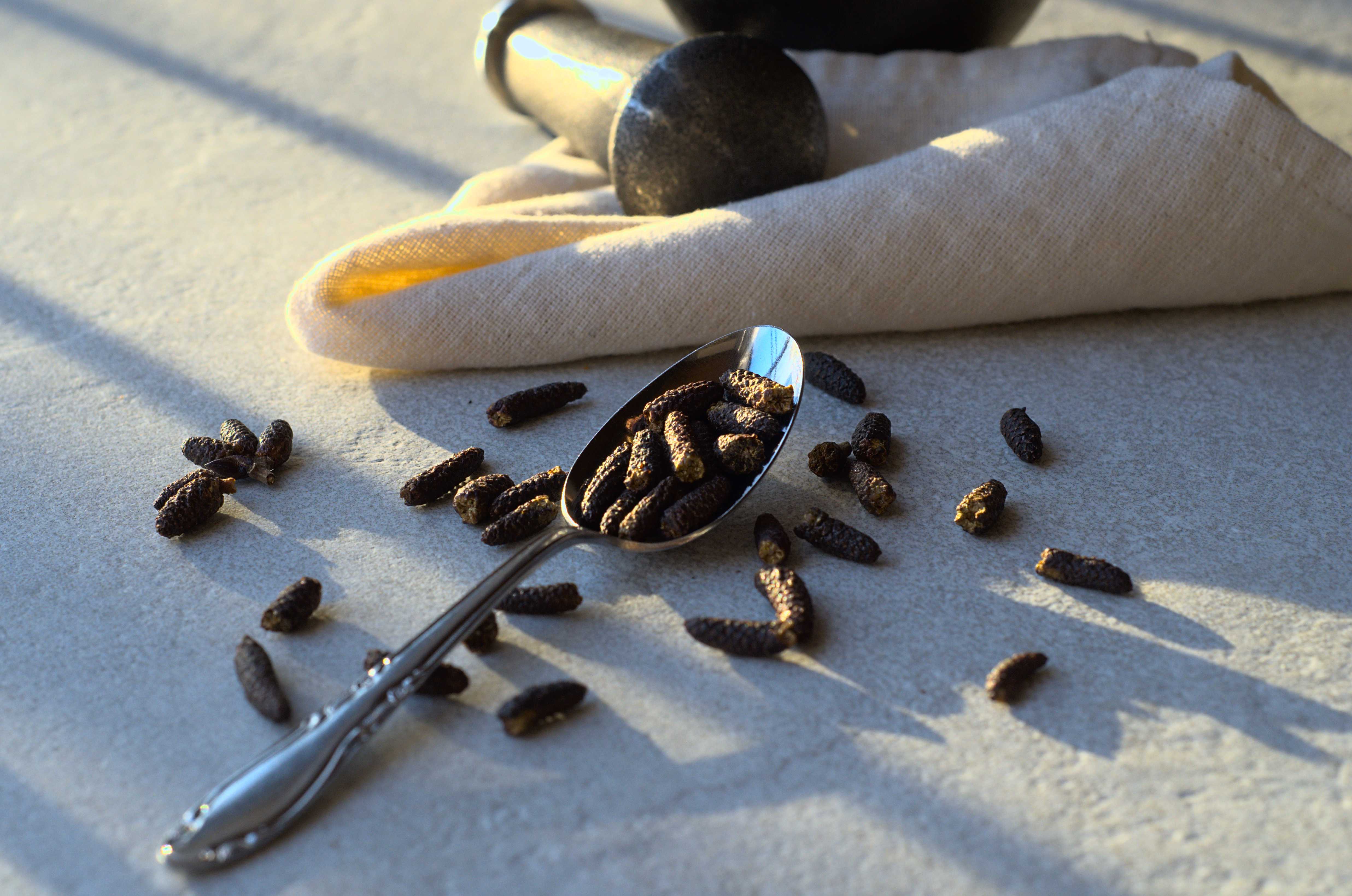
Dune pepper is the dried catkin of green alder (Alnus alnobetula), a shrub native to Quebec. It is one of the most versatile boreal spices: resinous, slightly fruity, equally at home in a dessert as in a meat broth.
Dune pepper is not a pepper
Surprise: dune pepper has nothing to do with black pepper (Piper nigrum). It is the catkin — the male flower in spike form — of green alder (Alnus alnobetula), a shrub that grows naturally in wetland environments: bogs, riverbanks, coastal dunes. It is this last characteristic that gave it its name.
Where does green alder grow?
Green alder is a widespread species in eastern Canada, but it is especially in northern Quebec that it is found in abundance, in moist, nutrient-poor soils, often near marshes, lakes and waterways. It can reach three metres in height and its catkins are harvested by hand.
What does it taste like?
Much milder than black pepper, dune pepper has a surprising aromatic complexity: resinous, slightly mentholated, with a fruity hint reminiscent of citrus, and a sweet softness that makes it unique. It is both more subtle and more versatile than black pepper.
How to use it in cooking?
This is where dune pepper shines: it adapts to almost anything.
- Meats and fish: added whole at the start of cooking in a broth, braise or marinade, then removed before serving, as you would with a clove
- Desserts: grated with a microplane into a strawberry compote, a pear tart or over ice cream
- Drinks: steeped in a gin tonic, a latte or even a vegetable broth
- Rubs and spice blends: ground in a mortar, it goes into rubs for wild game or Nordic marinades
Preparation tips
Avoid the spice grinder: the resin can damage the mechanism. Prefer the microplane for a delicate effect, or the mortar for more intensity. If you only have a knife and a cutting board, you can also slice it thinly, then crush it with the flat of the blade to obtain a coarse powder. The earlier you add it during cooking, the more intense its flavour will be — but so will its bitterness. Add it towards the end of cooking if you only want its aromatic quality.
What to cook it with?
Dune pepper pairs well in both sweet and savoury dishes. Here are a few simple ways to introduce it into your cooking:
- Cream sauce for pasta, fish or poultry: steep a few whole catkins in warm cream, remove before serving
- Mashed potatoes: grated with a microplane into the purée at the end of cooking, it adds a woody, slightly fruity note
- Meat stew: added whole at the start of cooking, as you would with a clove, then removed before serving
- Strawberry and rhubarb compote: a few grated catkins at the end of cooking for a delicate fragrance
- Homemade chicken broth: replace or supplement the black pepper with whole catkins
Flavour pairings
- Small fruits: strawberries, haskap berries, blueberries — its fruity sweetness perfectly complements their acidity
- Meats: game, duck, lamb, chicken — in a rub ground with a mortar or steeped in a sauce
- Root vegetables: Jerusalem artichokes, parsnips, carrots — roasted or puréed, they highlight its resinous, sweet character
What about the smoked version?
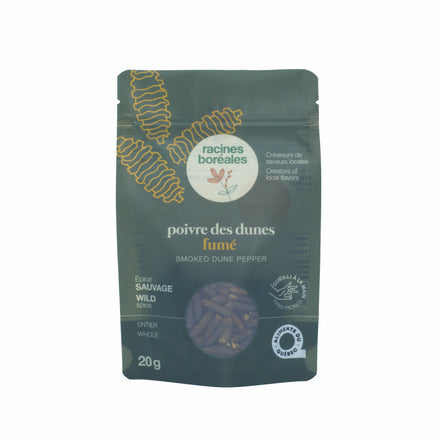
Racines boréales is the only producer to offer a smoked dune pepper. The smoking process adds an extra depth to the already complex aromas of the green alder catkin, making it a privileged pairing with red meats, fatty fish (salmon, Arctic char, mackerel) and washed-rind cheeses — among others.
Where to get it?
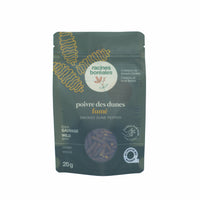
Racines boréales offers dune pepper in a 20 g format, harvested and dried in Quebec. A wonderful way to discover one of the most distinctive spices of our Nordic terroir.
Discover this ingredient